

The trailblazing scientist returns with a book that centres nature’s cycles of renewal in the future vision of our forests
When the forest breathes out, we breathe in. When the forest thrives, we thrive. The world-renowned forest ecologist Suzanne Simard has transformed our understanding of the profound intelligence and interconnectedness of trees. In When the Forest Breathes, she uncovers how the deep-rooted cycles of renewal that sustain the forest can also help us to protect our entire global ecosystem.
Raised in a family of loggers committed to sustainable stewardship of the land, Simard has watched as timber companies leave the forests of her native British Columbia vulnerable to wildfires and drought, threatening the crucial biodiversity that they support. But her groundbreaking research for the Mother Tree Project – one of the most ambitious forest ecology experiments of its kind – has the potential to chart a new course.
The forest, she reveals, is a living symphony of finely honed cycles of birth, growth, death and rebirth that hold the key to protecting the natural world. Working closely with local Indigenous communities, whose sustainable practices have been largely ignored, Simard examines how holistic, regenerative forestry that preserves the cycles of the forest can help solve the global climate crisis. Weaving together scientific discoveries and luminous storytelling, Simard’s book is a call to rediscover our kinship with the natural world, and listen to the lessons of the forest.
Write a Review
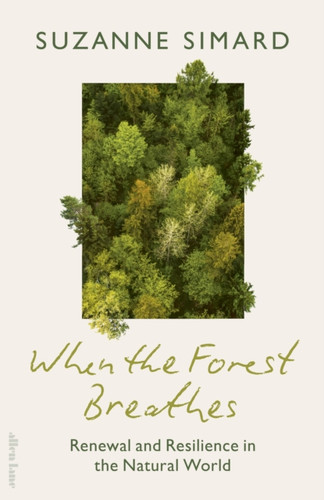
When the Forest Breathes 9780241763315 Hardback
-
When the Forest Breathes by Suzanne Simard
When the Forest Breathes by Professor Suzanne Simard Finding the Mother Tree by Canadian forest ecologist Suzanne Simard became a best-seller when it was published in 2021, no doubt helped by three barn-storming TED talks. The book’s core proposition is that the oldest trees in the forest can co…
When the Forest Breathes by Professor Suzanne Simard Finding the Mother Tree by Canadian forest ecologist Suzanne Simard became a best-seller when it was published in 2021, no doubt helped by three barn-storming TED talks. The book’s core proposition is that the oldest trees in the forest can communicate and share resources with younger trees - even of a different species - through interconnecting networks of fungal mycelia known as mycorrhizae. Thus the ‘mother’ trees can come to the aid of others that are struggling. The forest is not a collection of individuals that are competing with each other for resources but a community employing cooperation to the benefit of all of its members. The mother tree hypothesis was warmly welcomed by many as an antidote to the ‘red in claw’ paradigm of strict Darwinian evolutionary theory but, predictably, it was criticised, particularly by a group of Professor Simard’s previous research colleagues who argued that her experiments had not produced unequivocal evidence of the effects that she had claimed. When the Forest Breathes continues her story. Like the previous book it’s partly popular science, partly a memoir of her struggle to be taken seriously as a woman working in a male dominated industry, and partly a plea for changes in forestry policy in her home Province of British Columbia, especially with respect to silviculture and forest management. It also provides her with an opportunity to respond to the criticism from former colleagues, which clearly hurt. She points out, not unreasonably, that the results of all of her experiments were published in respected journals and were subject to peer review. It does seem to me that it was rather churlish of those colleagues to criticise her summaries of that work in a book aimed at a general audience and which required summarising and generalisation. It’s fair to say that the mother tree hypothesis is still contested and not totally accepted by the scientific establishment, but it got us all thinking about the dynamics of forests, which must be a good thing. The new book provides us with more food for thought and it sounds a very clear alarm about the consequences of forestry practice, in British Columbia specifically but, I suspect, in many countries with a logging industry. Professor Simard’s recent research has demonstrated beyond much doubt that the clear-cutting of blocks of old growth forest leads to a massive loss of carbon formerly sequestered in soils with the result that those forests, widely promoted as being carbon sinks, are through human action becoming net carbon sources. That is a catastrophic consequence which policy makers should acknowledge and address as a matter of extreme urgency. Some of the writing in this book made me shudder. The notion of mother trees passing on their wisdom to a younger generation may just be the author’s device for expressing very complex ideas in a form accessible by general readers. The problem is that some people will accept it as the literal truth and will be set up to be disappointed, while others may deliberately misunderstand and use it as ammunition to discredit her work and avoid its warnings, which would be tragic. In recent years Professor Simard has worked closely with Indigenous foresters and community leaders to try to reach a synthesis of western forest science and indigenous wisdom. That will be difficult but it needs to be done because there is much to be learned, and time is running out. This is an inspiring and timely book and, as a former forester, I’m so grateful that she has written it.
- Authors:
- Simard, Suzanne
- Year Published:
- 2026
- Country of Publication:
- United Kingdom
- Format:
- Hardback
- ISBN:
- 9780241763315
- Number of Pages:
- 336
- Publication Date:
- 31/03/2026
- Publisher:
- Penguin Books Ltd
- Language:
- English
- Place of Publication:
- London
- SKU:
- 9780241763315